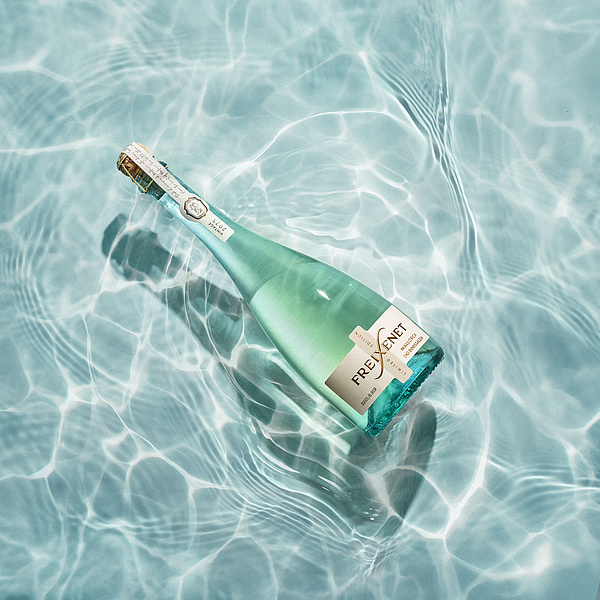
Freixenet Mallorca Limited Edition 2025 brings together a globally recognised sparkling-wine house, a historic Mallorcan winery and two native island grapes. Presented in June 2026, the inaugural release is limited to 6,919 numbered bottles worldwide.
Its appeal is unusually clear. This is not simply a familiar label in seasonal packaging: it is a D.O. Binissalem sparkling wine made in Mallorca from Prensal, also known locally as Moll, and Giró Ros. For hotels, restaurants, villas, yachts and private buyers, it offers an immediately understandable sense of place with enough production detail to support a serious conversation.
A Mallorcan collaboration
Freixenet created the wine with Bodegas José L. Ferrer, the Binissalem producer established on the island in 1930. Freixenet contributes its sparkling-wine experience; the local winery brings knowledge of the vineyards, native varieties and D.O. Binissalem territory.
The first commercial vintage is 2025. Freixenet describes the project as the beginning of a longer commitment to Mallorca rather than a one-off design exercise. That matters to hospitality buyers: a beautiful inaugural bottle can create interest, but the possibility of future vintages makes the story more useful for a wine programme or recurring destination gift.
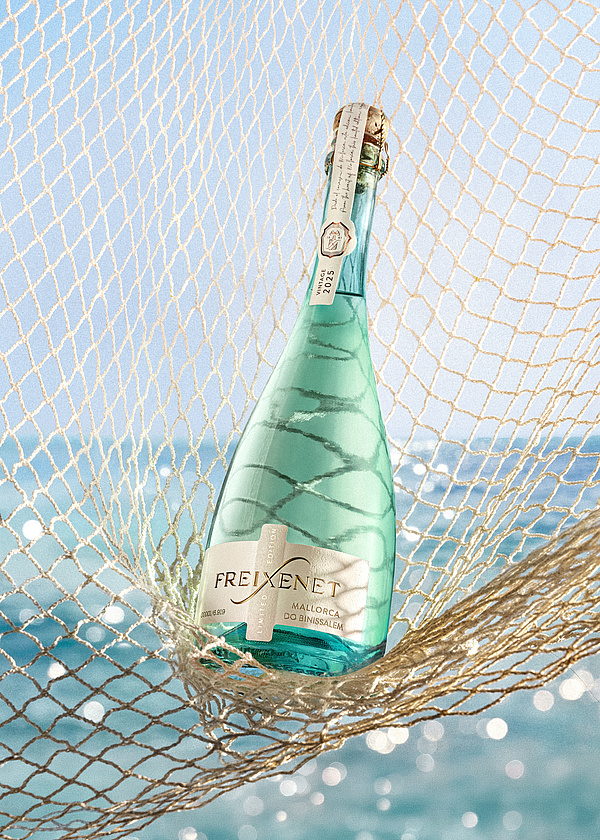
The island connection is also visible in the presentation. The aquamarine bottle was designed to evoke Mediterranean light and water. It is distinctive enough for a suite welcome, celebration table or gifting brief without needing elaborate secondary decoration.
Native grapes and island identity
Prensal and Giró Ros are central to the proposition. Prensal forms the majority of the blend, with Giró Ros completing it. Freixenet associates Prensal with freshness, delicacy and white-fruit character, while describing Giró Ros as contributing volume, complexity and citrus and tropical nuances. These are the producer’s descriptions, not a Deligoods tasting note.
The grapes come from vineyards under D.O. Binissalem with maritime influence. They were harvested at night between late summer and early autumn, a choice the winery says helped protect aromatic purity and natural acidity before vinification.
Using local grapes gives the wine a more credible destination story than a generic Mediterranean theme. A guest can connect the bottle to Mallorca’s vineyard culture, not only to its coastline and resorts. That makes it relevant for properties and hosts who want local identity without giving up the familiarity of an international sparkling-wine name.
How the sparkling wine was made
The two varieties were fermented in stainless steel before blending. The base wine then underwent a second fermentation in bottle, followed by ageing on the lees. Freixenet also states that every bottle was riddled by hand before disgorgement. The finished wine is Brut.
The producer describes a pale-gold wine with fine, persistent bubbles and aromas of green apple, pear, loquat and Mediterranean flowers. On the palate, its own description emphasises smoothness and acidity. Buyers planning an important service should taste the current release with their menu and confirm the preferred serving temperature and opening sequence with their beverage team.
Numbered production adds a collector element, but this remains a wine intended to be enjoyed. The strongest commercial case is therefore not speculation; it is a well-chosen placement where Mallorca, sparkling wine and occasion come together.
Where it fits
In luxury hotels, the wine could work as a Mallorcan welcome, an island-focused pairing or a celebratory bottle in a suite or private dining room. Its local grape story gives staff more to discuss than appearance alone, while the Freixenet name lowers the barrier for guests unfamiliar with D.O. Binissalem.
For restaurants, the producer proposes seafood, sea-bass carpaccio, Asian flavours with wasabi and tropical desserts. Kitchens should treat these as starting points and test the wine against the finished dish. Fresh shellfish, delicate raw fish and lighter Mediterranean menus are logical editorial directions.
For yachts and villas, the bottle is particularly relevant when the itinerary, host or guest has a connection to Mallorca. Stable storage, careful delivery and enough advance notice remain essential during busy island periods. Private aviation buyers may find it more convincing as a destination amenity or arrival gift than as a default onboard selection.
The numbered release also suits corporate and private gifts tied to the Balearics, hospitality openings or milestone occasions. Before building a campaign around it, buyers should confirm available bottle numbers, presentation format and the quantity that can be supplied together.
Spanish availability and export potential
The wine is already offered through established Freixenet channels in Spain, so this is not an open-market representation opportunity. Deligoods’ useful role is selective sourcing, destination delivery and international buyer support where the precise route needs to be checked.
Freixenet announced the edition as a global launch and presented it through travel-retail activity in Mallorca. That signals international ambition, but it does not confirm availability in every country. Overseas buyers should establish whether an appointed importer covers their destination and whether the limited vintage can move through that channel.
For hospitality groups, the key commercial question is whether enough bottles can be secured for the intended use without overcommitting. A short seasonal feature, private event or gifting allocation may be more realistic than a permanent listing.
Questions buyers should ask
Confirm the exact vintage, numbered-bottle status and provenance of the available stock. Ask how the wine has been stored and whether delivery will protect it from heat and handling shocks.
Establish the available allocation, case configuration, minimum order, lead time and delivered cost. For international movements, agree the importer of record, excise, tax, customs documentation and insurance before dispatch.
Hospitality teams should also ask whether current technical sheets, service guidance and approved imagery are available for staff training or a private event. For gifting, check the presentation and any deadline before promising a numbered bottle.
Freixenet Mallorca Limited Edition questions
Where is the wine made?
It is produced in Mallorca under D.O. Binissalem through a collaboration between Freixenet and Bodegas José L. Ferrer.
Which grapes are used?
The blend combines the native Mallorcan varieties Prensal, also called Moll, and Giró Ros.
How limited is the inaugural release?
Freixenet states that 6,919 numbered bottles were produced worldwide from the 2025 vintage.
How is it made?
The base wines were fermented in stainless steel, blended and given a second fermentation in bottle, followed by lees ageing and manual riddling before disgorgement.
Who is it best suited to?
Luxury hotels, restaurants, villas, yachts, private clients, wine-focused gifts and international buyers seeking a sparkling wine with a specific Mallorcan identity.
Can Deligoods assist with a sourcing enquiry?
Tell us the destination, intended use, quantity and required date. We’ll confirm sourcing options, pricing and delivery on enquiry.
Enquire through Deligoods
If this limited Mallorca release could suit a wine list, hospitality programme, private event, gifting brief or international order, share the destination and timing.
Explore more Deligoods Discoveries.
Research reviewed 23 October 2026. Product identity, D.O. Binissalem origin, collaborators, grape varieties, production method, launch date and edition size checked against current Freixenet and Henkell Freixenet information. Photography courtesy of Henkell Freixenet.
Please enjoy responsibly.