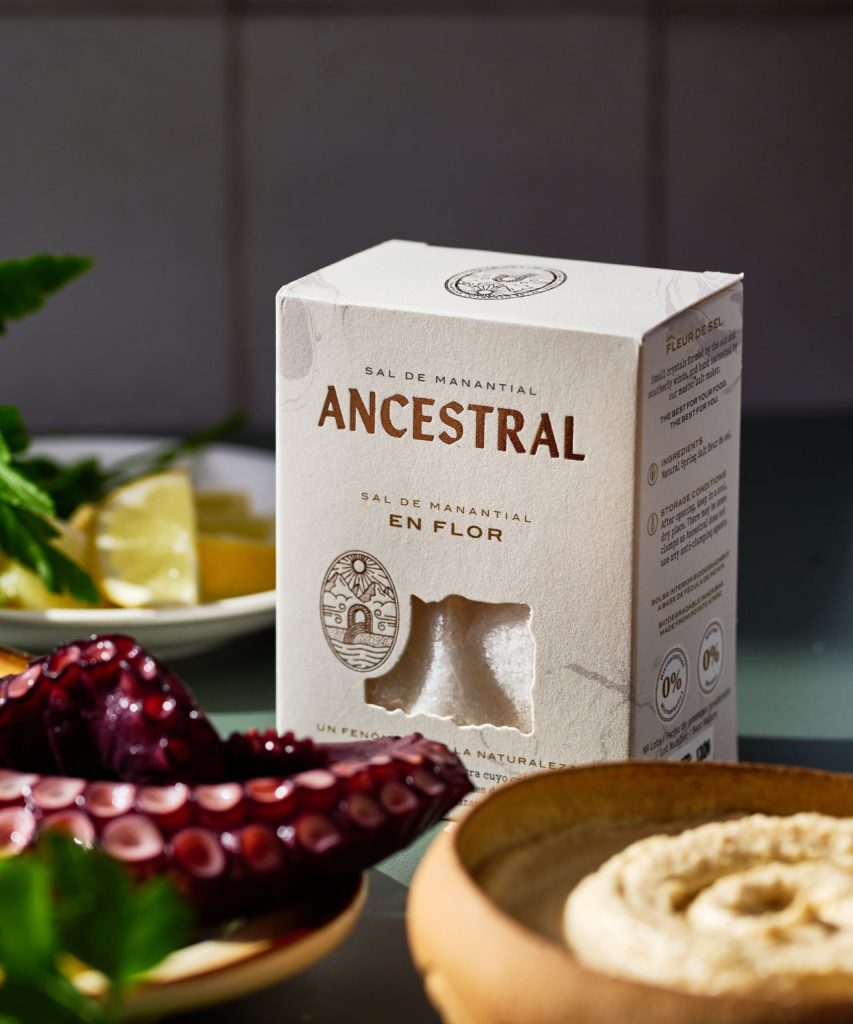
A finishing salt is a small detail with a very visible role: the last pinch over a plate, the crystals beside good bread, or the final touch on a simply cooked vegetable. Ancestral caught our attention with two Spanish spring salts worth exploring: Flor de Sal de Manantial and Escamas de Sal de Manantial.
For Deligoods, the appeal is the combination of a specific place of origin and a clear purpose at the table. These are products we would consider for a chef-led pantry, a thoughtful Spanish food gift or a hospitality setting where the ingredients deserve a little explanation.
Spring salt from Navarra
Ancestral places its origins in Navarra, at the foothills of the Urbasa and Andía ranges. The producer describes a process that begins with spring water passing through underground salt deposits, followed by evaporation using sun and wind and harvesting by hand.
That inland origin is central to the story. The term sal de manantial refers to spring salt; these products are presented as salts from a saline spring rather than seawater. Ancestral also describes a family tradition of salt making behind the range.
For a restaurant or specialist food selection, a named origin gives the product context. The interesting question is then how each crystal format earns its place in the kitchen.
Ancestral Flor de Sal de Manantial
According to Ancestral, its flor de sal forms as fine, fragile crystals at the surface of the salt pans during slow evaporation. It is gathered at the beginning or end of the day. The producer describes a delicate texture that dissolves gently, positioning it as a finishing salt.
Our suggested starting point would be a restrained dish: sliced tomato with olive oil, warm potatoes or simply cooked fish. Add a small amount immediately before serving and taste before adding more. The aim is to assess whether the finishing touch improves the balance of the complete dish.
For a chef comparing salts, it is useful to try this format on both warm and room-temperature food. That makes it easier to judge how quickly the crystals dissolve and whether the result suits the intended service.
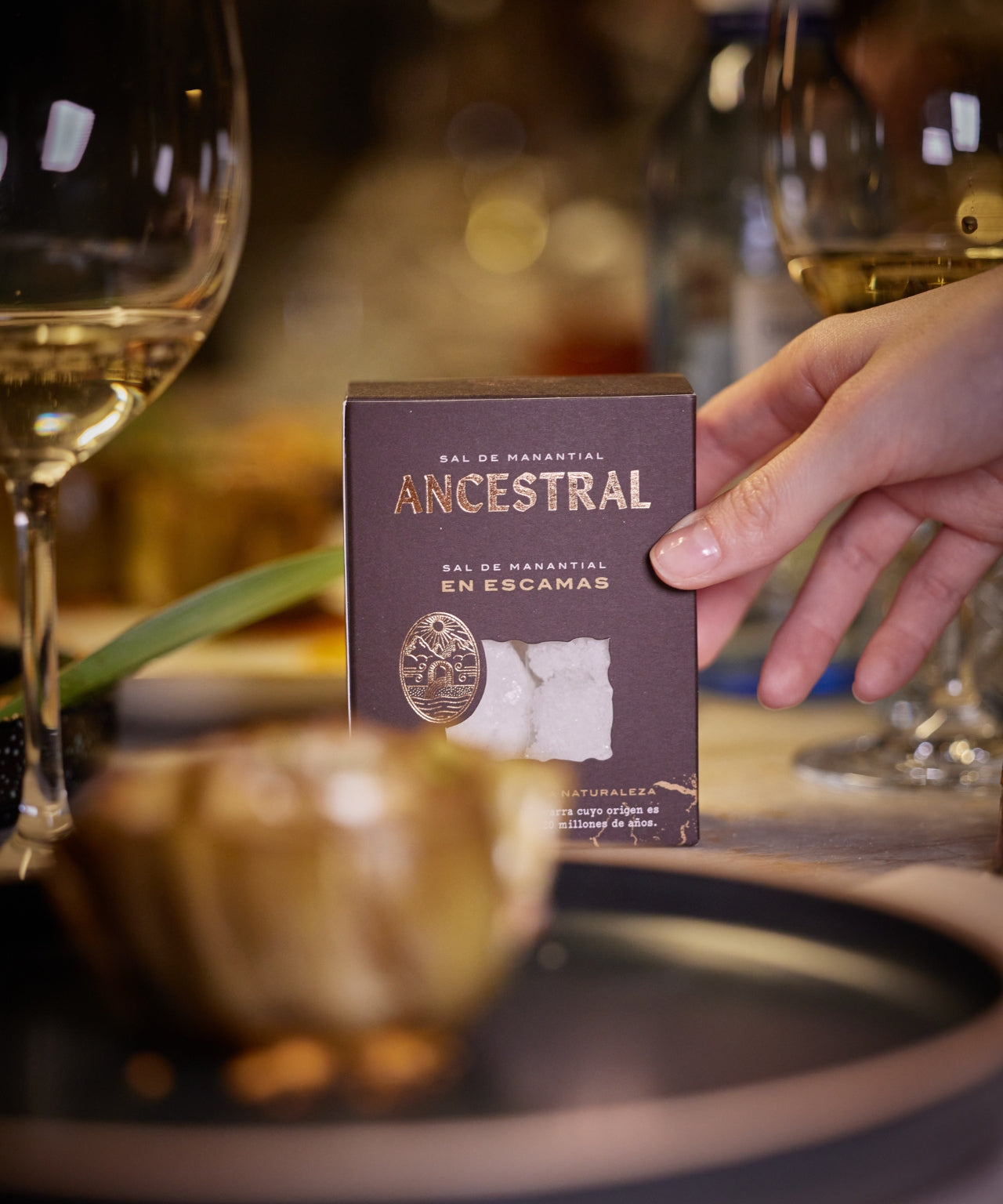
Ancestral Escamas de Sal de Manantial
The flakes offer a different presentation. Ancestral describes slow crystallisation under cooler, slightly humid conditions, with careful collection from the bottom of the pans to preserve the flakes.
For a menu trial, we would explore them where the finishing salt remains visible: over grilled vegetables, on sliced meat just before service, or alongside bread and extra virgin olive oil. Apply with the fingertips and keep the first portion modest, especially if the dish already includes salty ingredients.
Which one would we explore first?
Flor de sal is the starting point for someone interested in a delicate finishing crystal. The flakes are the option to explore when the appearance and handling of the salt matter at the moment of plating. These are serving suggestions based on the product descriptions, rather than a tasting verdict.
A useful side-by-side trial is deliberately simple. Prepare the same ingredient in two portions, keep the oil and other seasoning identical, and finish each with a different salt. Compare the result straight away and again after the normal delay between plating and reaching the table.
For hospitality, that second comparison matters: an ingredient should work within the actual service, whether it is a restaurant pass, a villa dinner or a private chef’s menu.
A place in a Spanish pantry
Good olive oil is an obvious companion to explore. Bread, oil and a small dish of finishing salt make a straightforward tasting exercise, allowing guests to adjust the seasoning themselves. Our LA Organic Suave and LA Organic Intenso offer two olive oil options to consider alongside that idea.
The salts could also be considered for a Spanish pantry gift built around ingredients the recipient will actually use. We would keep such a selection concise and include practical serving notes. For a professional buyer, the questions to settle are the appropriate pack format, expected usage, presentation and destination.
Storage and handling
Ancestral advises keeping both salts dry after opening. It states that they contain no anti-caking agents, so some clumping may occur. In a working kitchen, a clean, dry serving utensil and a container kept away from steam are sensible handling choices.
Questions about Ancestral salt
Are these flavoured salts?
The ingredient listings identify spring-salt flor de sal and spring-salt flakes respectively. These two selections are not presented as flavoured blends.
When should I add them?
Our suggested use is as a final seasoning shortly before serving. Start with a small pinch, taste the whole dish and adjust to suit the other ingredients.
Can Deligoods explore sourcing for a restaurant or gift project?
Yes. Tell us which salt interests you, your intended use, approximate quantity and delivery destination. We will check sourcing options and confirm the details for your enquiry.
Interested in Ancestral?
For your kitchen, hospitality project or Spanish pantry selection, tell us what you have in mind.
Explore more Deligoods Discoveries.
Product and origin information reviewed against Ancestral’s published descriptions on 26 October 2026. Serving ideas are Deligoods editorial suggestions. Photography: Ancestral.