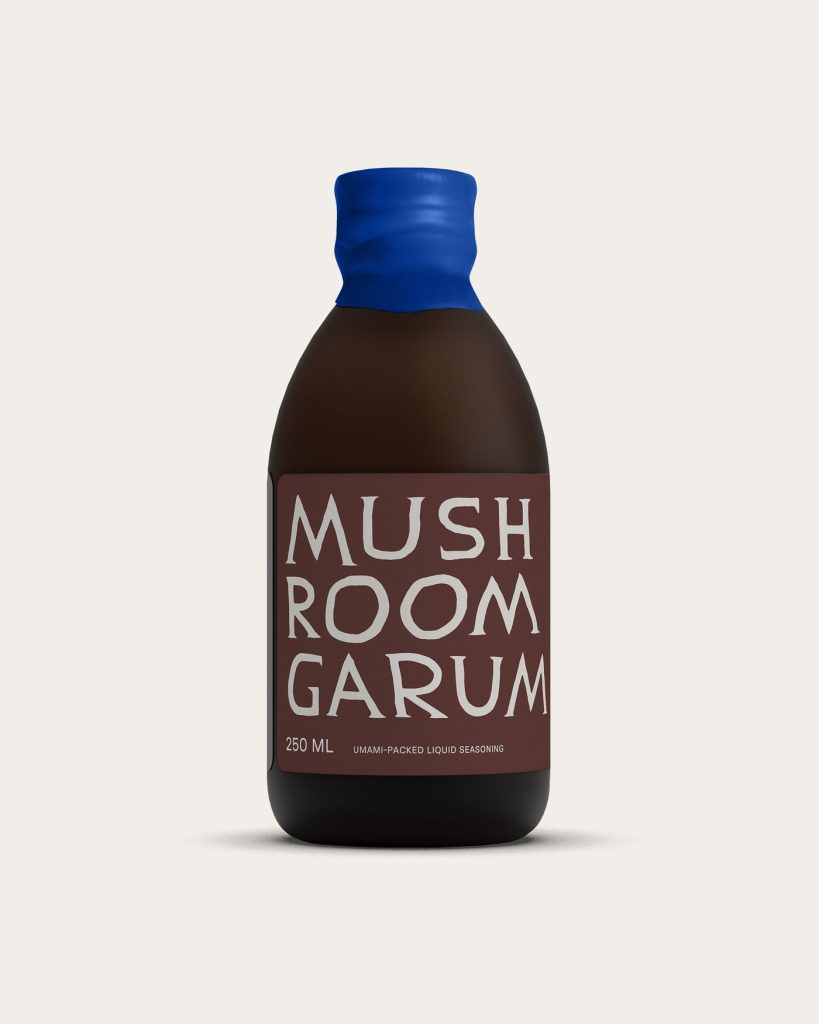
Mushroom Garum by Noma Projects is a fermented seasoning built for cooks who want depth without making every dish taste like the same condiment. Made in Copenhagen from mushrooms, oats and rice koji, it translates a restaurant fermentation technique into a practical kitchen ingredient.
That makes it an unusually credible discovery for chef-led hotels, independent restaurants, private chefs and food-focused gifting. It has a strong story, but its real value is functional: a small addition can support savoury flavour in vegetables, sauces, grains and broths without becoming the obvious centre of the plate.
What Mushroom Garum is
Garum is historically associated with fermented fish sauces from the ancient Mediterranean. Noma’s fermentation work applies the underlying idea in a different way, using koji to unlock savoury flavour from ingredients beyond fish.
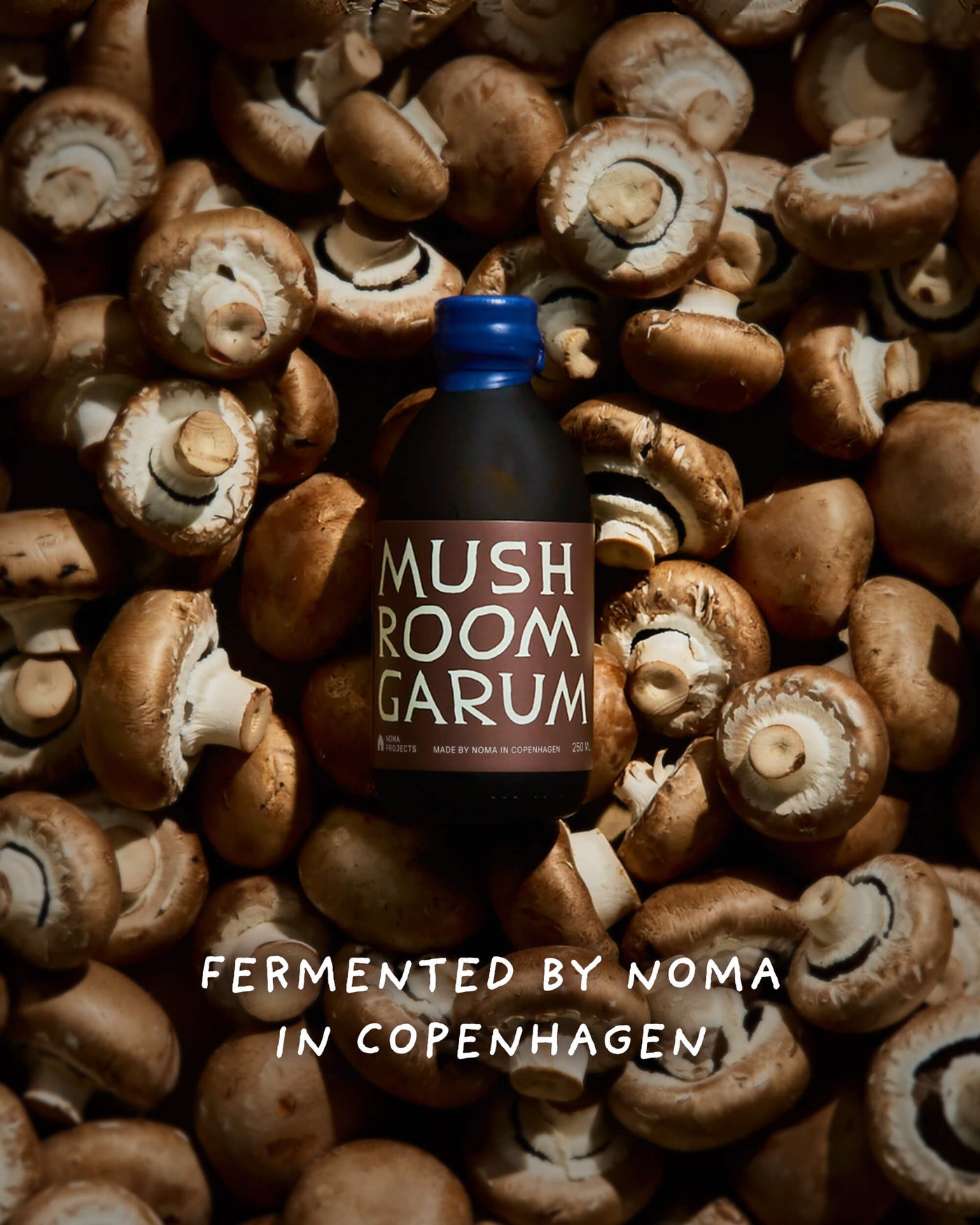
Noma Projects says its current Mushroom Garum combines mushrooms, rice koji and an oat-based garum. The published ingredient list is concise: water, mushrooms, oats, rice koji and salt. It is made by Noma in Copenhagen, close to the restaurant and the Noma Projects workshop.
The producer presents this as a development of its original Smoked Mushroom Garum, first released in 2022. The newer recipe brings mushrooms and oat garum together, aiming for a rounded seasoning that works below the surface of a dish rather than acting only as a finishing sauce.
That distinction matters. This is not simply mushroom extract in decorative packaging. Koji supplies enzymes that break down proteins and other components during fermentation, creating the savoury intensity associated with amino acids. The technical explanation comes from the producer; the practical implication for buyers is an ingredient intended to amplify flavour, not a ready-made sauce that dictates a single cuisine.
Why it is commercially interesting
Mushroom Garum sits at the intersection of several durable menu needs: more expressive vegetable cookery, efficient flavour building and guests’ curiosity about fermentation. It also comes from a name that chefs and serious food customers already recognise, which can reduce the explanation required for a first trial.
For professional kitchens, the strongest argument is versatility. Noma Projects proposes it for ragùs, broths, cooked vegetables and risotto. Those uses suggest a back-of-house ingredient with repeat potential rather than a novelty purchased once for display.
It may be especially useful where a kitchen wants plant-led dishes to feel complete without imitating meat. Each chef should test dosage, salt balance, allergens and menu wording against the current specification.
The logistics are also comparatively straightforward for an imported premium ingredient. It is produced within the EU, the brand currently ships to EU destinations including Spain, and unopened product is sold through an established online operation. Once opened, it should be refrigerated in line with the label. For professional supply, case quantities, lead times and recurring availability should be confirmed for each project.
Where we see it working
A tasting-menu restaurant could use Mushroom Garum to deepen a mushroom broth, glaze roasted roots or season a vegetable sauce. A luxury hotel kitchen might find it valuable across several outlets: in a room-service grain bowl, a bar snack, a vegetarian banquet dish or a sauce for grilled vegetables.
Private chefs and yacht caterers may appreciate an ingredient that creates interest without requiring a large mise en place. For private aviation catering, it is more likely to be useful in the production kitchen than at the point of service, where precise recipe control and chilling procedures matter.
It also has gifting potential for culinary clients who value provenance and genuinely cook. The product story is specific enough to feel considered, while the applications are broad enough that it need not remain unopened as a collector’s object.
Practical ways to test it
Begin with a controlled kitchen trial rather than building a menu description around the name. Compare a familiar vegetable broth, mushroom sauce or risotto with and without the seasoning, then adjust salt only after the garum has been incorporated. This makes its contribution easier to judge.
For a hotel or event kitchen, test it in preparations that can be standardised across a team. A measured addition to a glaze, jus-style vegetable sauce or braising liquid is more repeatable than an improvised splash at the pass.
It can also be explored in non-vegetarian cooking. The producer publishes ideas including roast chicken and cured egg-yolk mayonnaise, illustrating that the ingredient is positioned as a general savoury tool rather than a niche substitute.
Questions professional buyers should ask
Before listing or menu development, buyers should request the current technical sheet, allergen declaration, organic documentation where relevant, storage instructions, batch coding and remaining shelf life on arrival. Spanish-language labelling and food-information requirements should be checked for the exact route to market.
Commercial questions include trade case configuration, minimum order, lead time, continuity of supply and whether hospitality or retail accounts in Spain are handled directly or through a distributor. For an initial trial, the buyer should also define the number of kitchens involved and a realistic reorder pattern.
Chefs should confirm whether the published formulation has changed since any previous sample. Noma Projects describes the current product as an improved version of its earlier release, so an old tasting note should not be treated as a specification for new stock.
Mushroom Garum questions
Is it the same as fish sauce?
No. It draws on the fermentation idea associated with garum, but the published formulation uses mushrooms, oats and rice koji rather than fish. Buyers should still rely on the current allergen declaration for purchasing decisions.
How should a chef use it?
As a seasoning during cooking or in a finished sauce, starting conservatively and adjusting after tasting. Broths, grains, mushroom dishes, roasted vegetables and savoury glazes are sensible trial applications.
Does it need refrigeration?
The producer instructs customers to refrigerate it after opening. Storage and service procedures should follow the label and the current technical specification.
Can Deligoods source it for Spain or international delivery?
Tell us the destination, intended use and approximate timing. We’ll confirm sourcing options, pricing and delivery on enquiry.
Enquire through Deligoods
If you are considering Mushroom Garum for a restaurant, hotel, yacht, private aviation kitchen, event, retail selection or culinary gift, share the destination and expected use.
Explore more Deligoods Discoveries.
Research reviewed 16 October 2026. Product identity, formulation, production location, shipping scope and wholesale route checked against current Noma Projects information. Photography courtesy of Noma Projects.